Español
 Français

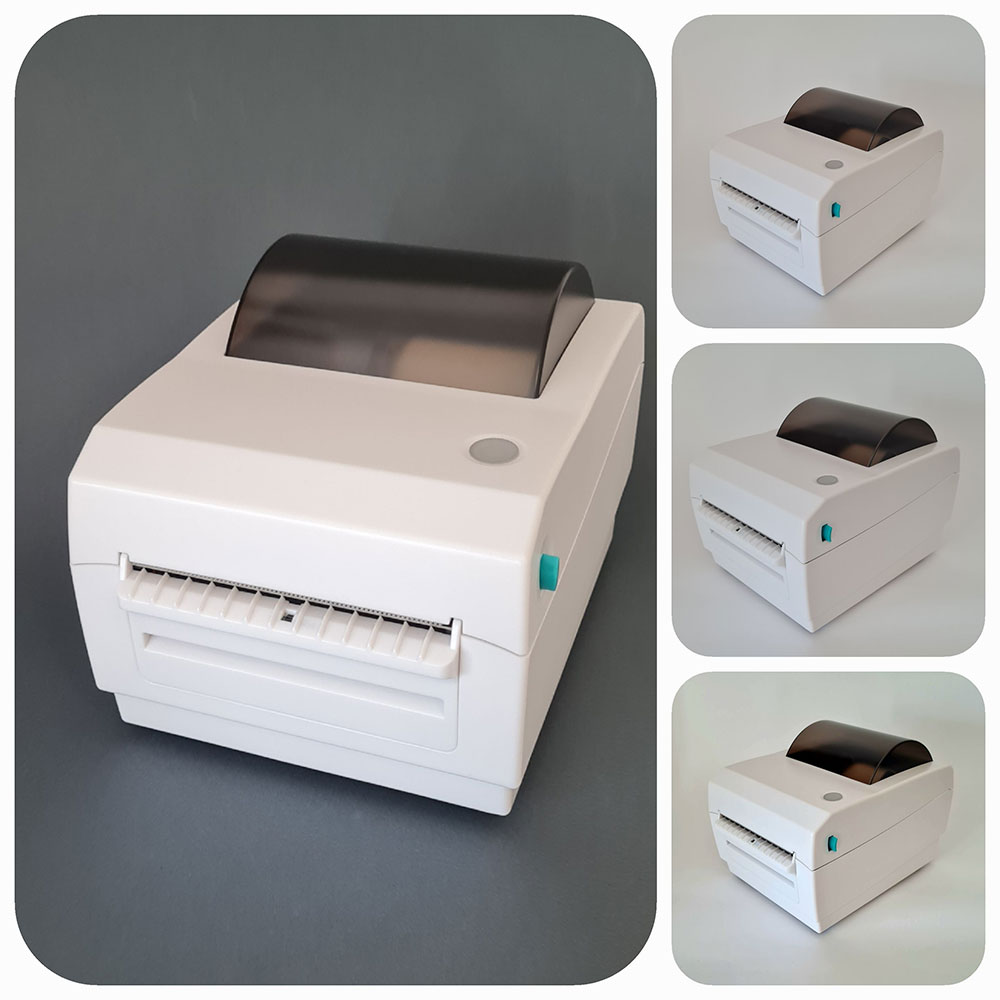
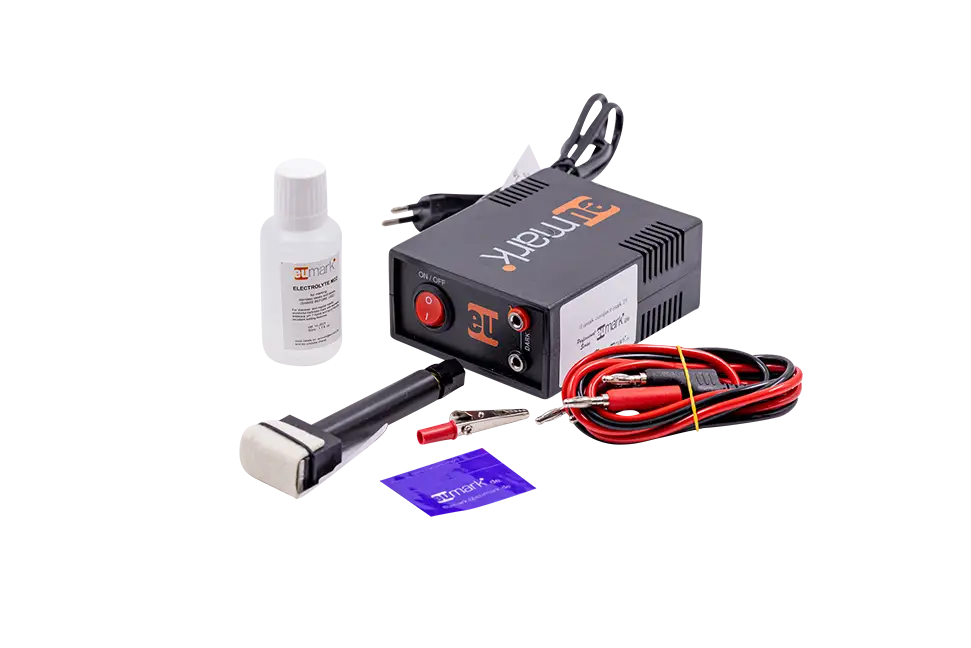
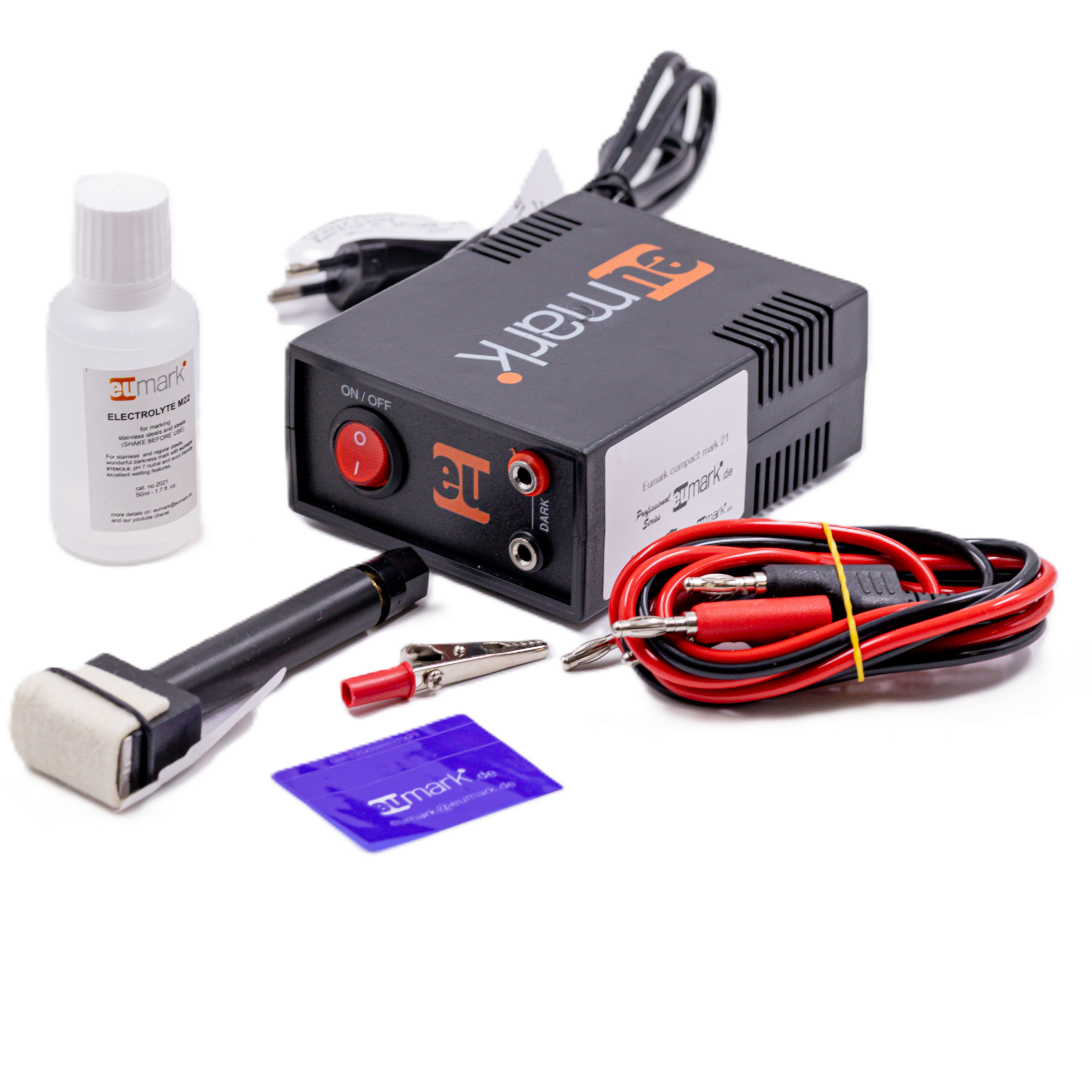
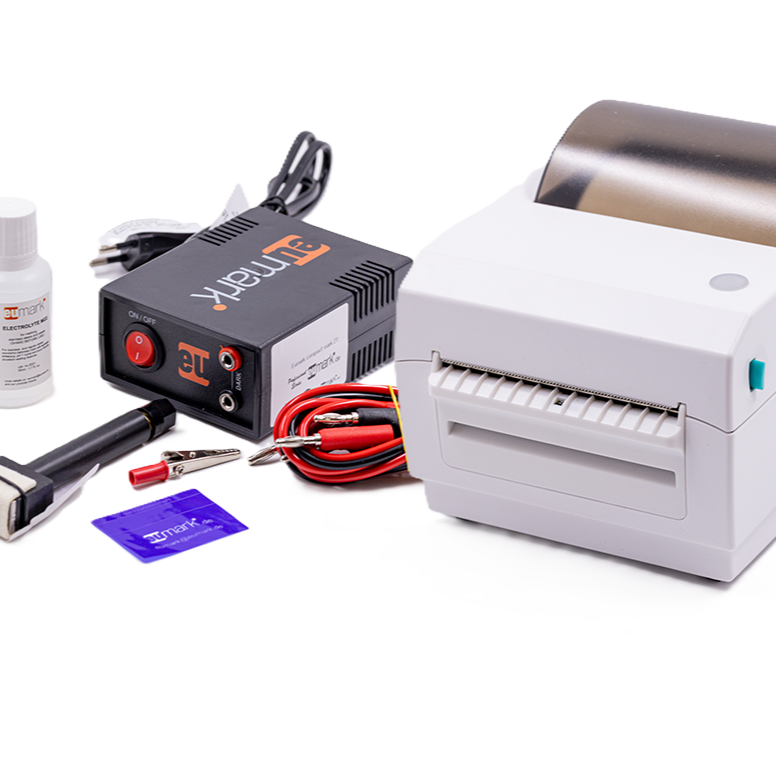
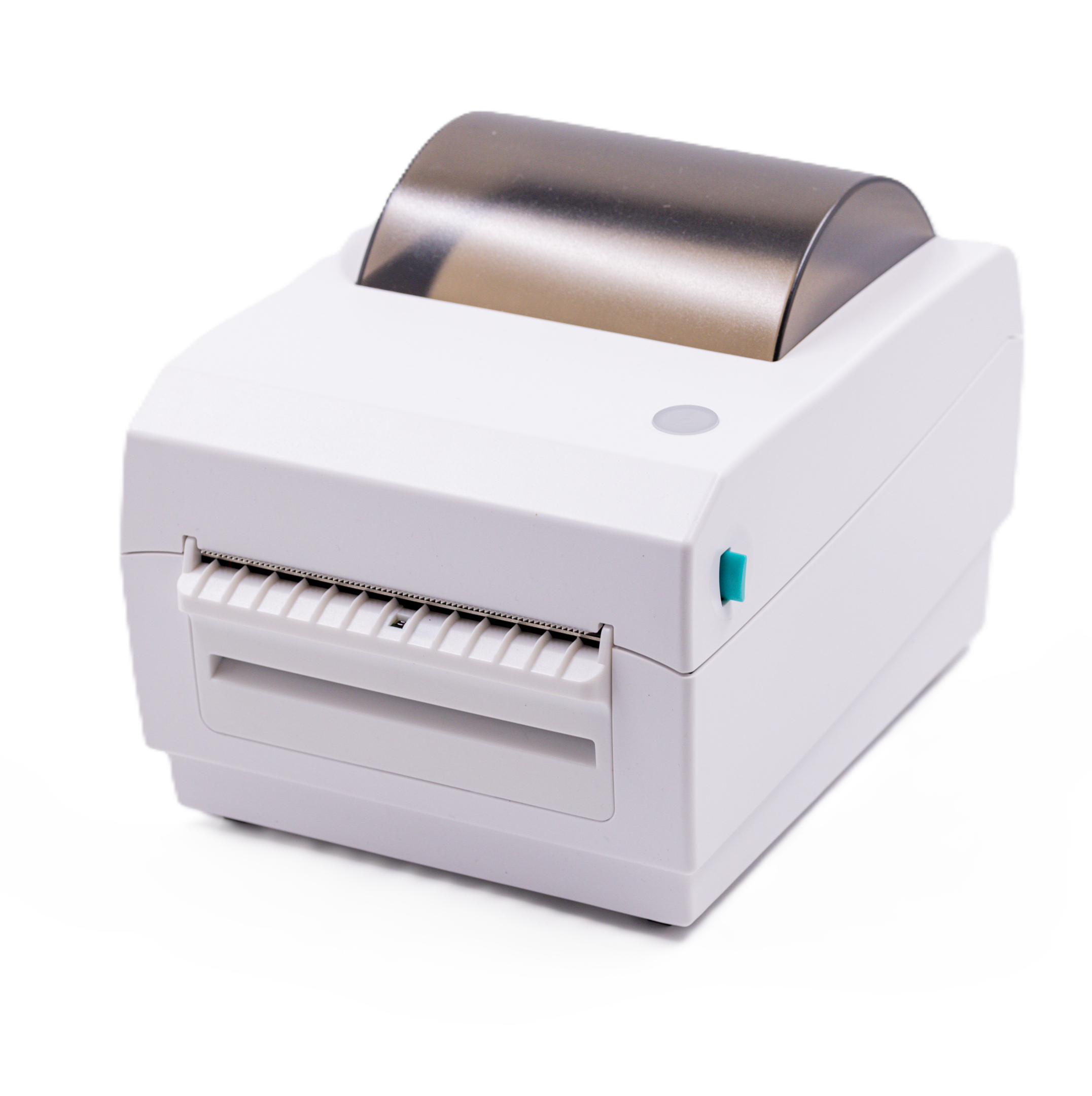
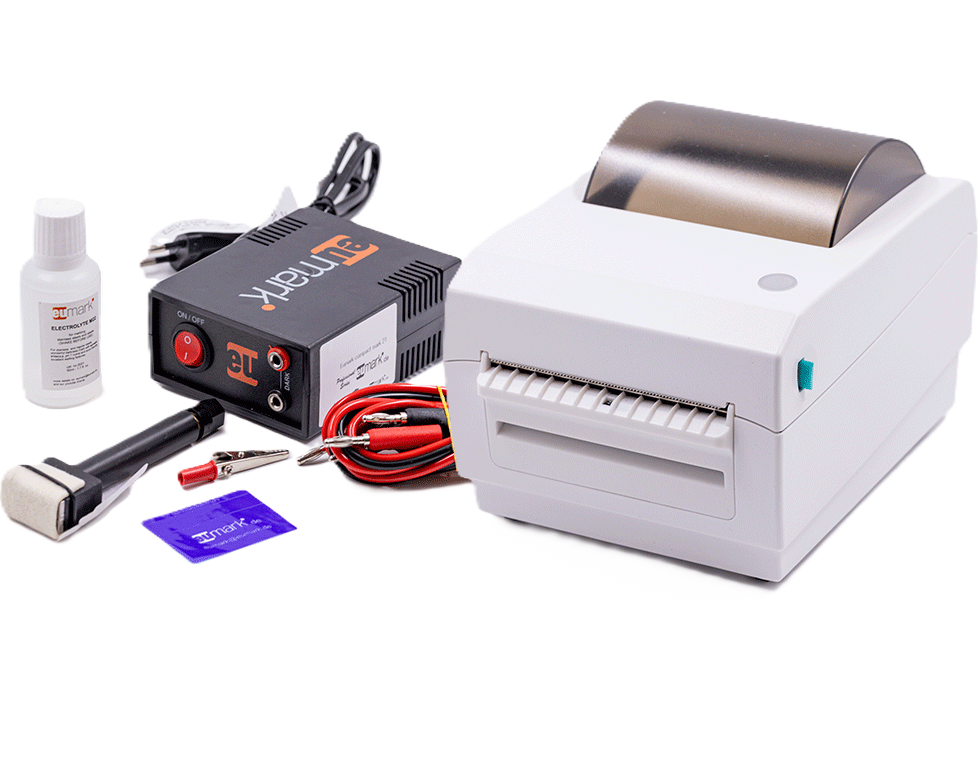

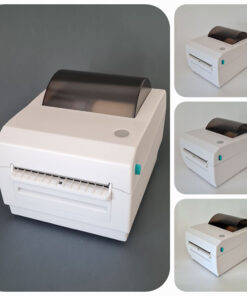
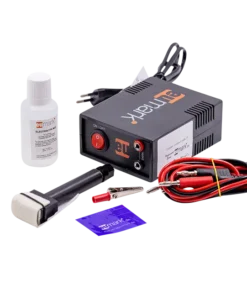
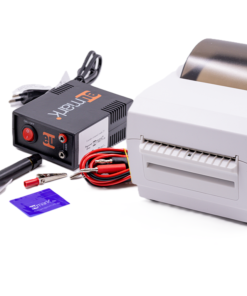
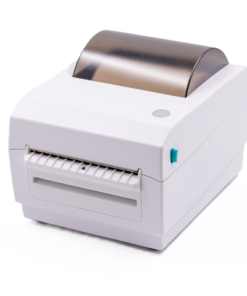
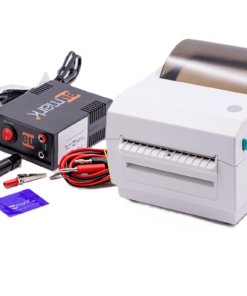
Electrochemical Marking System – EUmark Set 07 (black marking, 60 mm × 108 m stencil tape)

849.99 $
A portable black-marking station built around the high-capacity CD410 stencil printer, supplied with a 60 mm × 108 m stencil roll. Produce hundreds of unique stencils between reloads — a strong fit for serial numbering, part traceability and aerospace MRO. PC, Android and iOS software included.
Permanent metal marking in seconds — no heat, no stress, no material damage. Set 07 pairs the compact EUmark unit with the large-format CD410 stencil printer, our configuration for shops that mark in high volume and high variety.
Add your own logo, text or serial number to any conductive metal surface. The unit runs on 110/220 V and is protected by both a standard and a thermal fuse. Need long-life photo stencils or fast low-cost stencils? Get in touch and we’ll advise.
Package contents
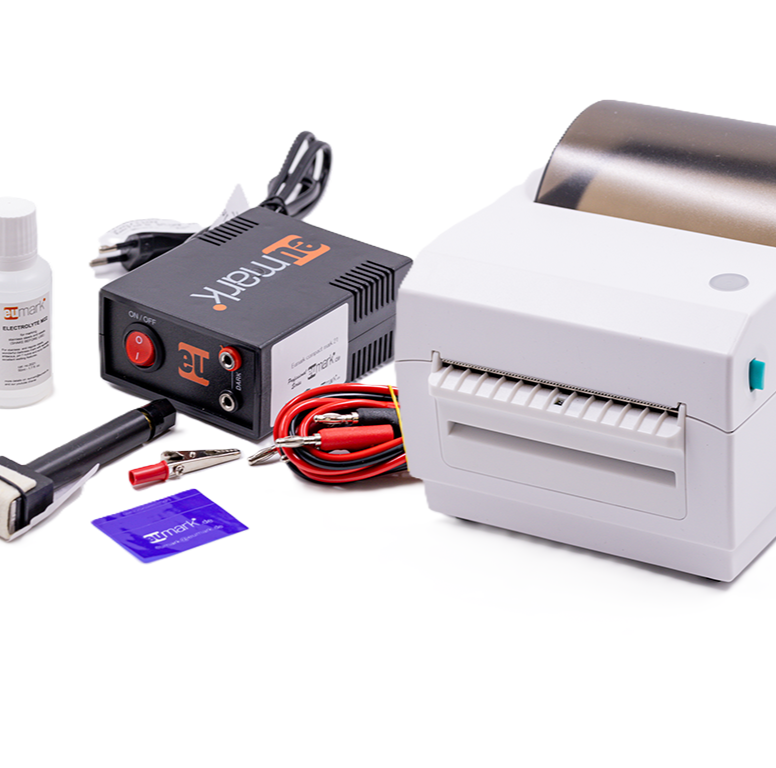
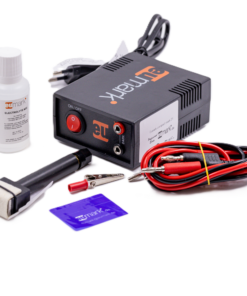
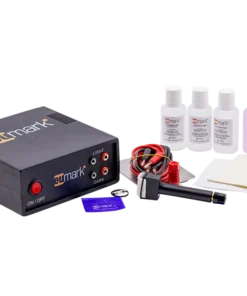
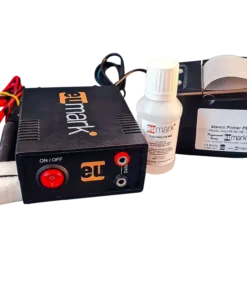
Marking unit, connecting cables and hand stamp; the CD410 stencil printer with a 60 mm × 108 m stencil tape already loaded; a sample electrolyte (M21 or M22) and a sample long-life stencil. Marking software for PC, Android and iOS is included.
Built for volume and variety
The CD410 is our largest stencil printer, and its 60 mm × 108 m tape means an exceptionally long print run before you reload. That makes Set 07 the right choice when each part needs its own individual mark — think continuous serial numbering, unit-level traceability, and aerospace service and overhaul work where documentation and identification are mandatory.
How electrochemical marking works
A low electric current passes through an electrolyte, a felt marker that holds the fluid, and a stencil carrying your artwork. Where the stencil is open, the current etches the design directly into the metal — a controlled electrochemical reaction rather than any mechanical or thermal process.
Key benefits
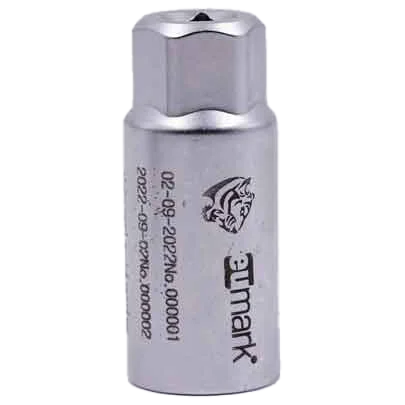
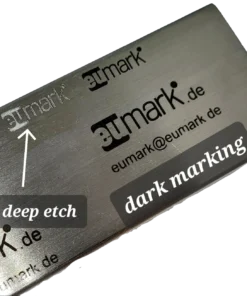
It is the quickest way to leave a permanent mark on conductive metal. Each mark is crisp, clean and low-cost, and because nothing cuts or heats the part, there is no stress, warping or distortion — and no corrosion afterwards. Marking takes only a few seconds and reaches roughly 0.025 mm deep. By choosing the function and electrolyte you can produce a clear etched mark, a black-oxide mark, or a white mark on chemically blackened parts. Flat, round, solid, hollow or already-assembled pieces are all fair game. The gear is dependable and built to last, needs very little bench space, runs during production or just before dispatch, requires no special training, and is safe to operate.
Typical applications
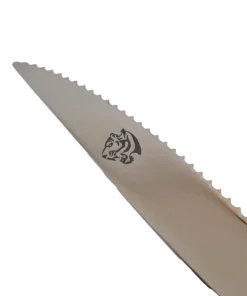
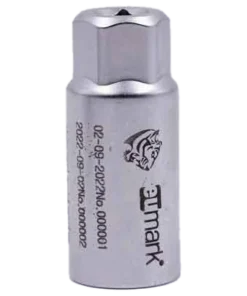
Blades and hand tools, machine and equipment parts, surgical and medical instruments, and aerospace or automotive components — anywhere permanent serial numbers, logos, data-matrix codes or traceability marks are required on metal.
| Weight | 5 kg |
|---|---|
| Dimensions | 30 × 25 × 20 cm |
Related products


Electrochemical etching

Electrochemical etching
Electrochemical etching
Electrochemical etching
Electro Chemical marking and Etching Machine EUmark set 06 compact with stencil printer

Electrochemical etching
Electro Chemical marking and Etching Machine EUmark set 05 compact