Español
 Français
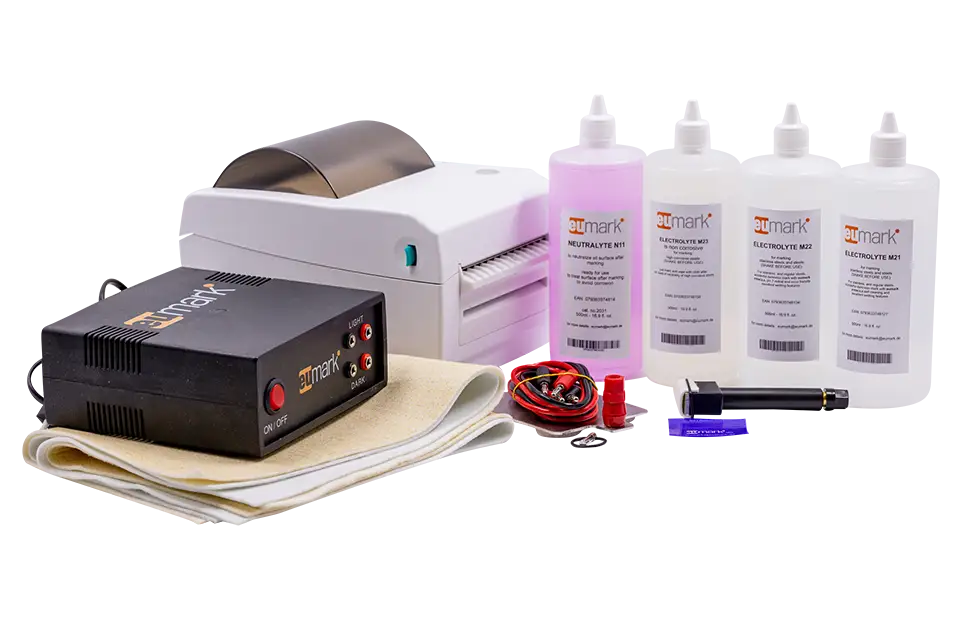



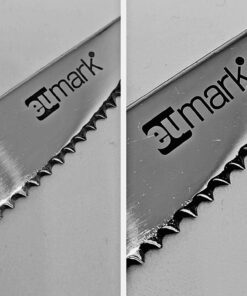
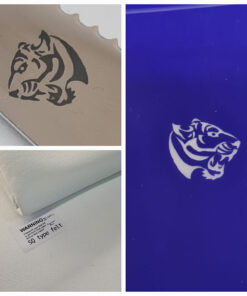
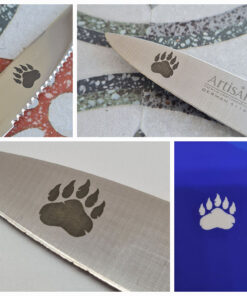
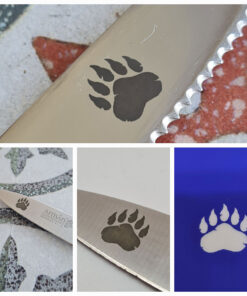
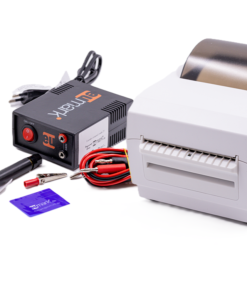
EUmark SUPER SET 04 – Electrochemical Etch Marking Kit with Stencil Printer
Original price was: 999.99 $.859.99 $Current price is: 859.99 $.
The complete production kit: full machine, wide-format stencil printer, and serial number software. Black oxide marking and deep etch, applied in 2–5 seconds with no heat input. Print your own stencils — including sequential serial numbers, QR codes and barcodes — in minutes instead of ordering them. Full 200 ml bottles of all four electrolytes, each with a safety data sheet. 110/220 V, ready for US, EU and UK.
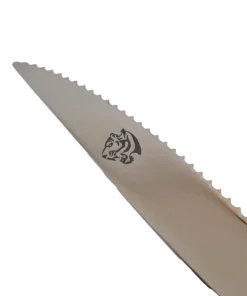
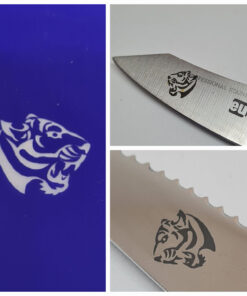
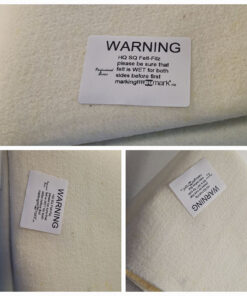
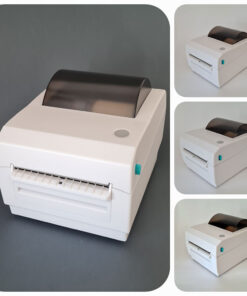
EUmark SUPER SET 04 — etch marking kit with stencil printer and serial number software
Here is the arithmetic that decides which kit a shop actually needs. The mark takes two to five seconds. If the stencil for it has to be ordered, the part waits days. That is fine when you are marking one fixed logo forever. It stops being fine the moment identification requirements turn every part into a different mark — serial numbers, work order numbers, heat lot IDs, date codes, unique device identifiers.
SUPER SET 04 puts stencil production on the same bench as the marking unit, and puts the software that generates the numbers in your hands. Type the content, print the stencil, mark the part, discard it. Nothing is scheduled, nothing is quoted, and no design carries a tooling cost.
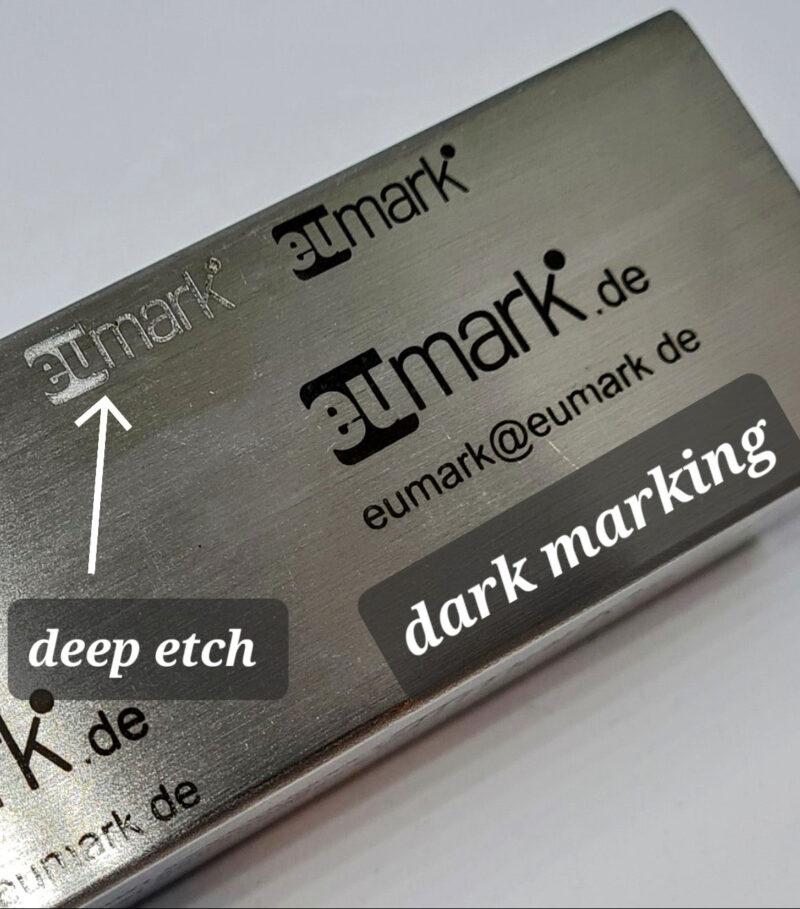
The full machine: both marking modes
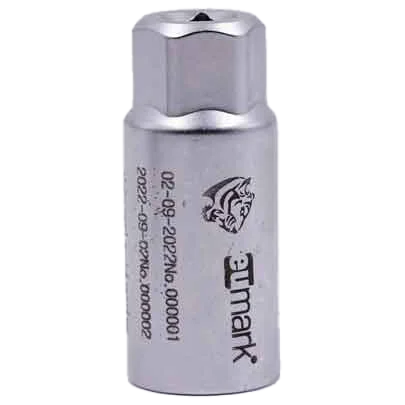
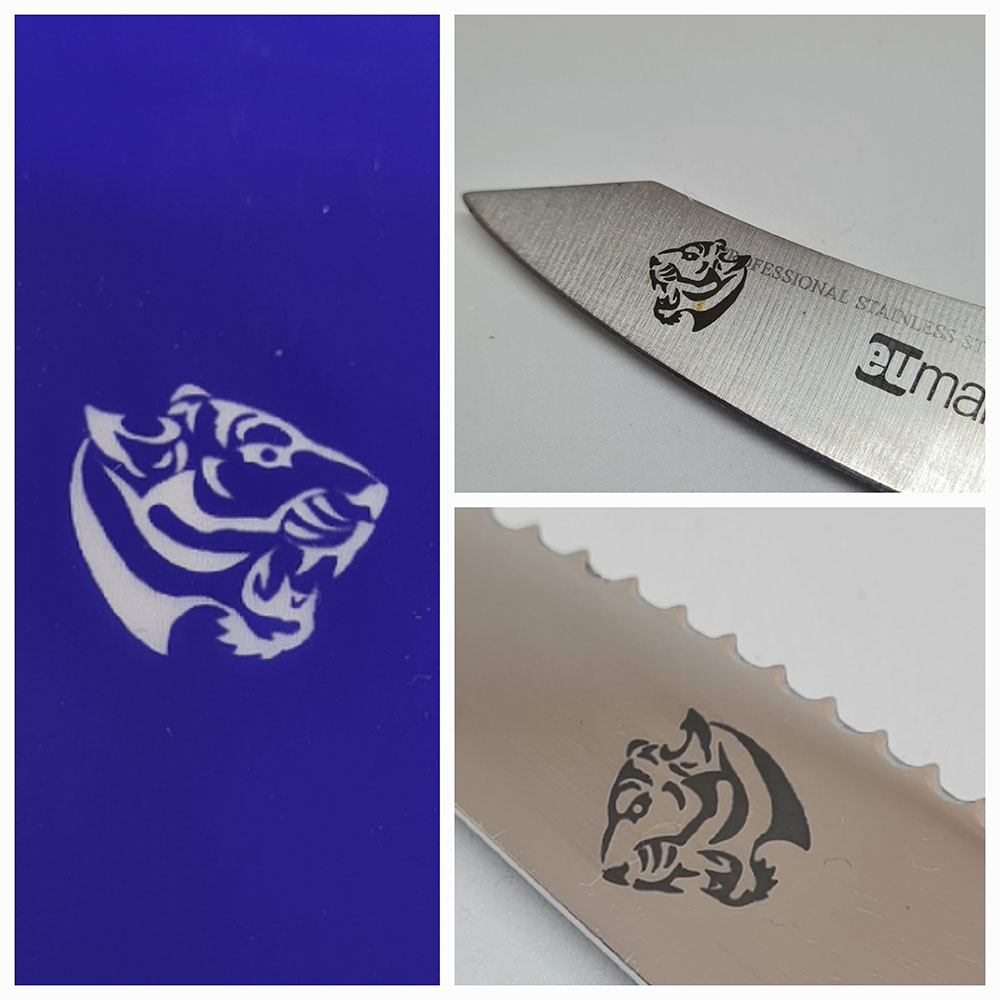
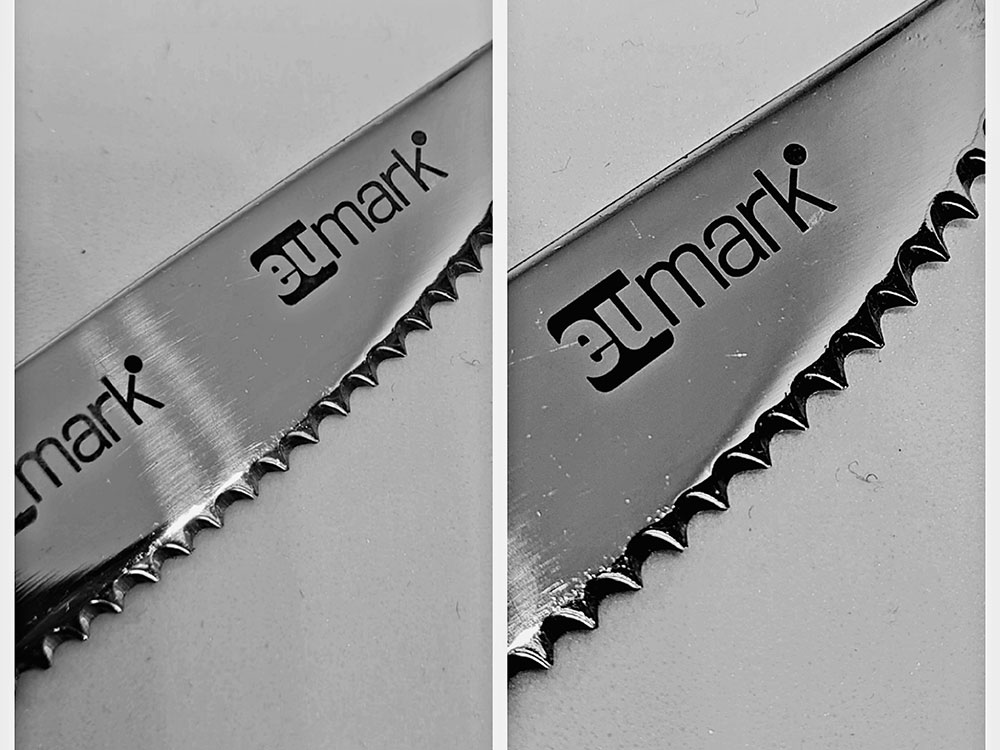
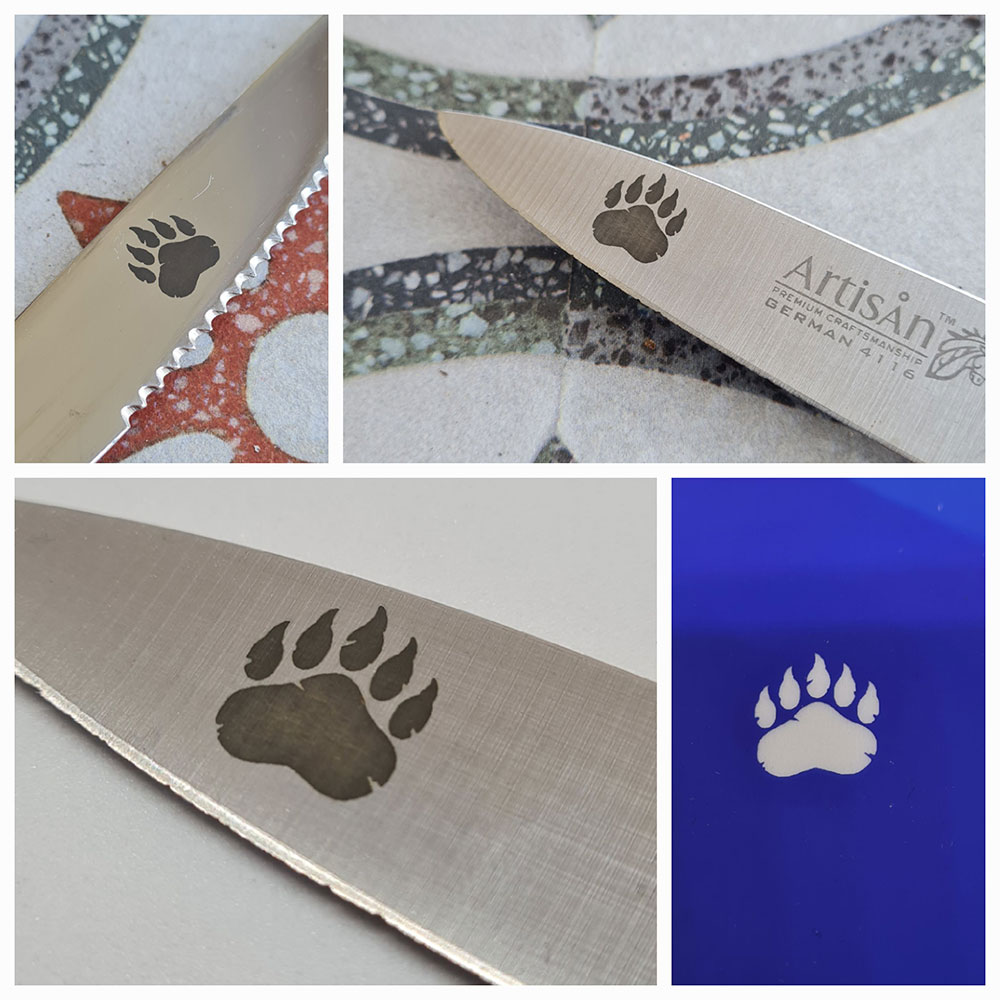
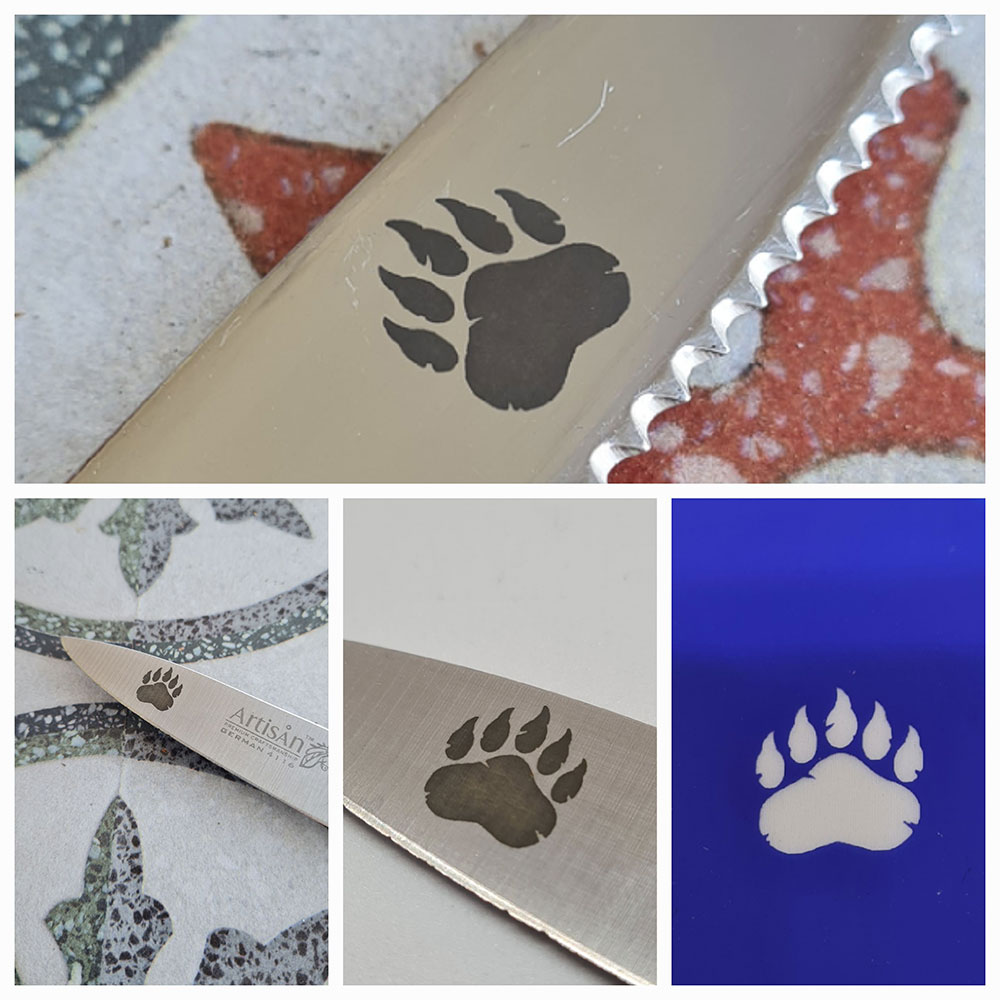
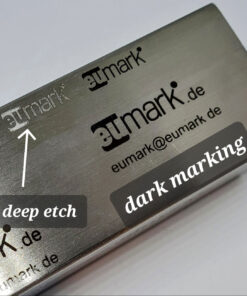
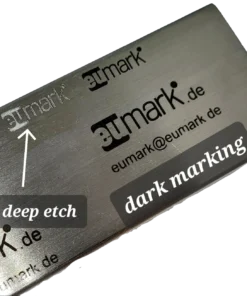
- Black oxide marking — shallow, high-contrast dark mark. What most identification and asset marking calls for.
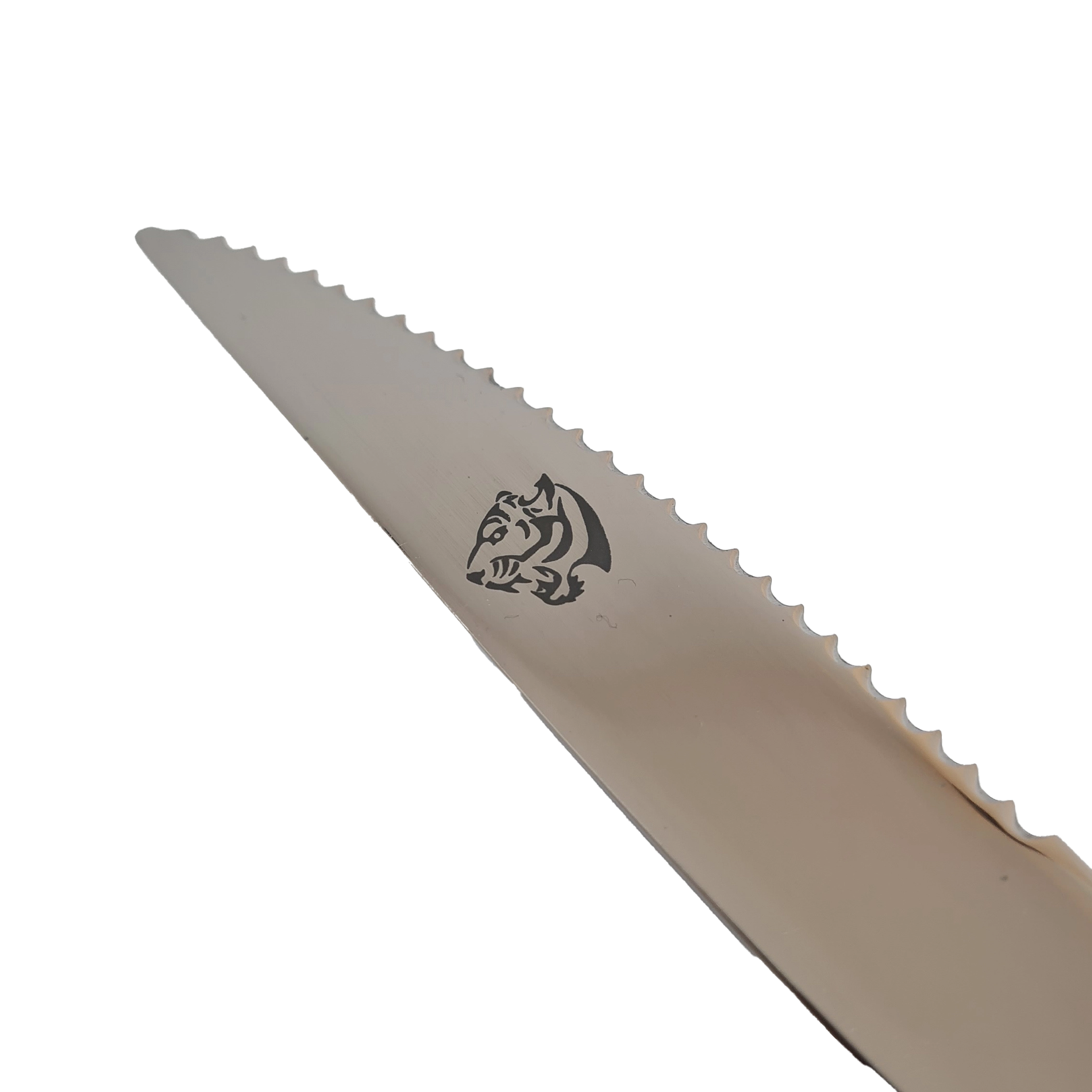
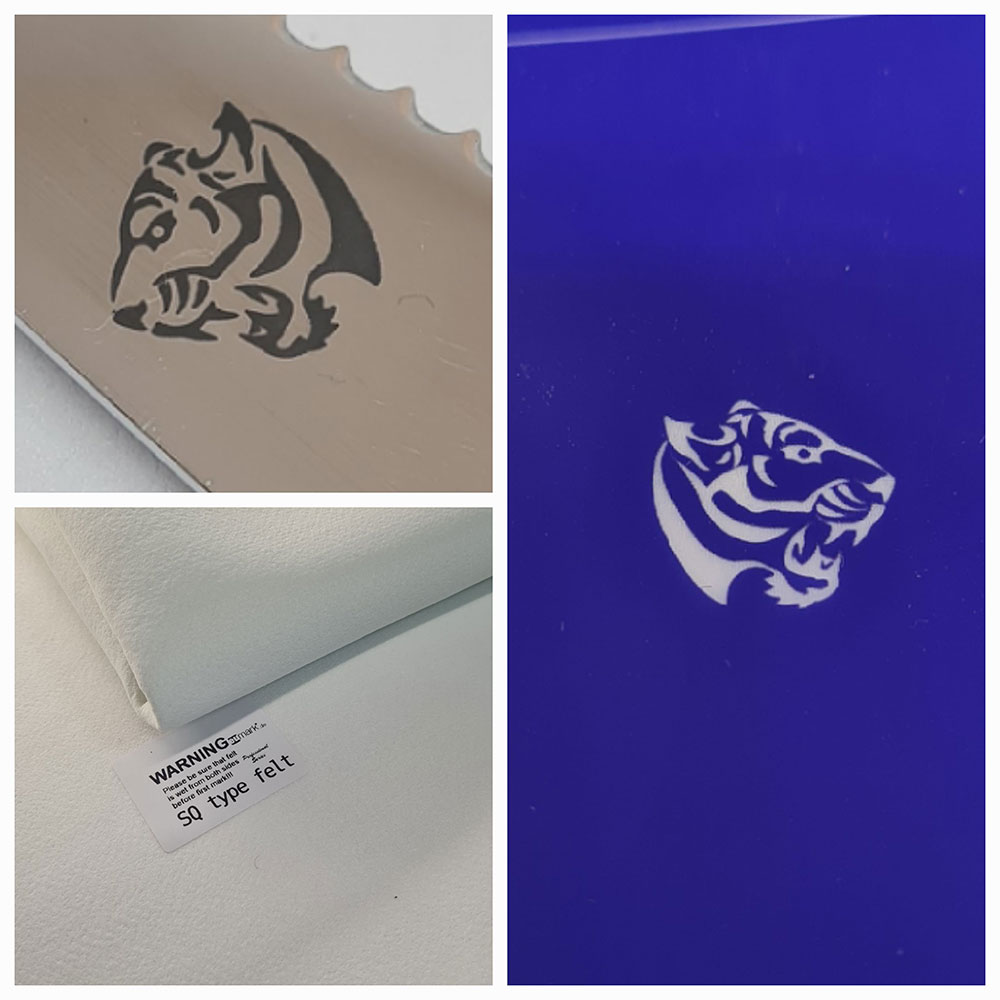
- Deep etch, light marking — a recessed, lighter mark with real depth, for identification that has to stay legible through further finishing, handling or service life.
The compact sets — 05, 06 and 07 — run black marking only. If a drawing specifies etch depth rather than contrast alone, SUPER SET 04 is the configuration that covers it, and it is the only one that pairs full-machine capability with a wide-format printer.
The software is what makes serialization practical
A printer on its own would not solve much. What makes this kit work for traceability is the software driving it — included with the set, no license fee, no seat count.
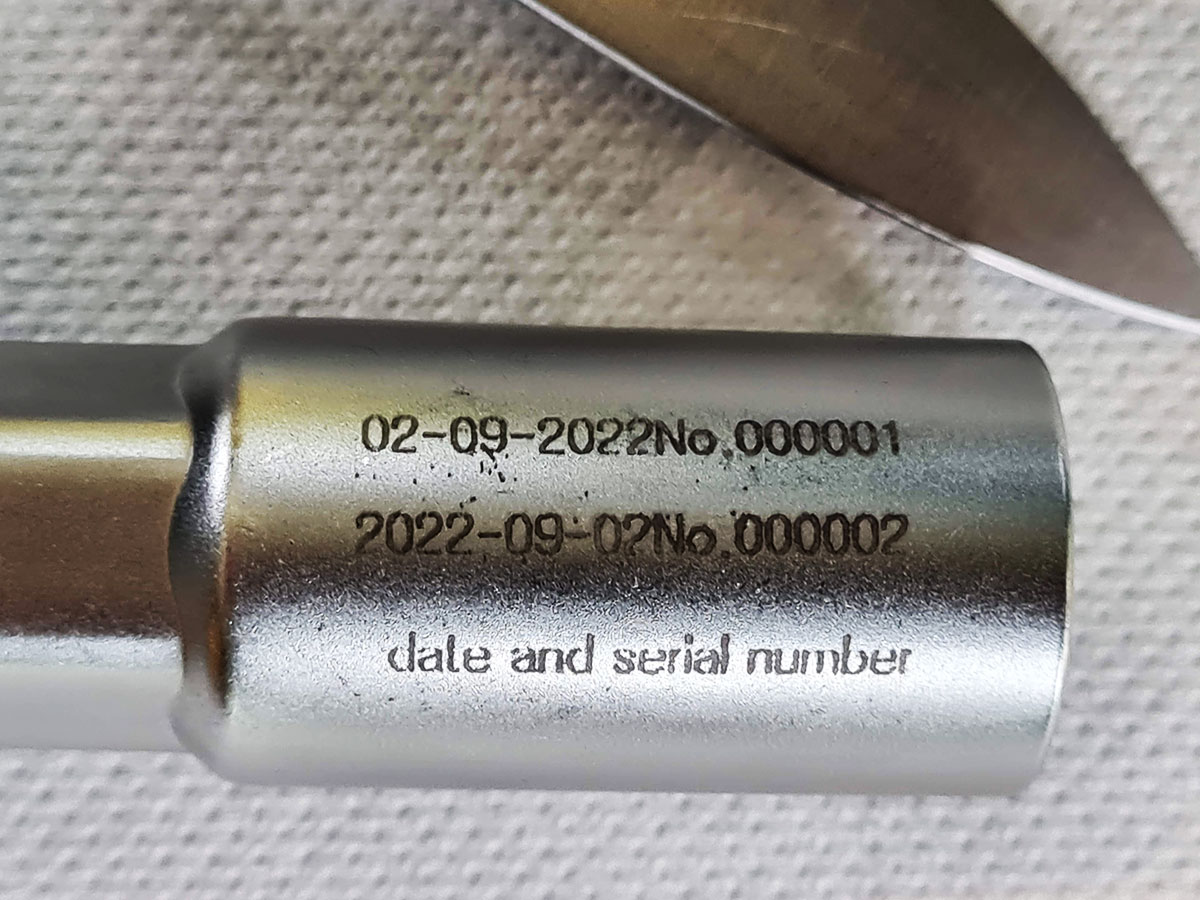
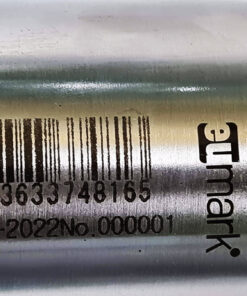
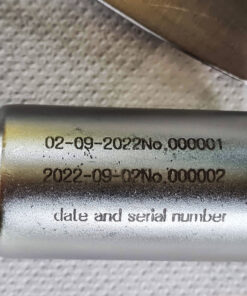
| Sequential serial numbers | Auto-incremented across a run, so nobody retypes a number and nobody transposes one |
|---|---|
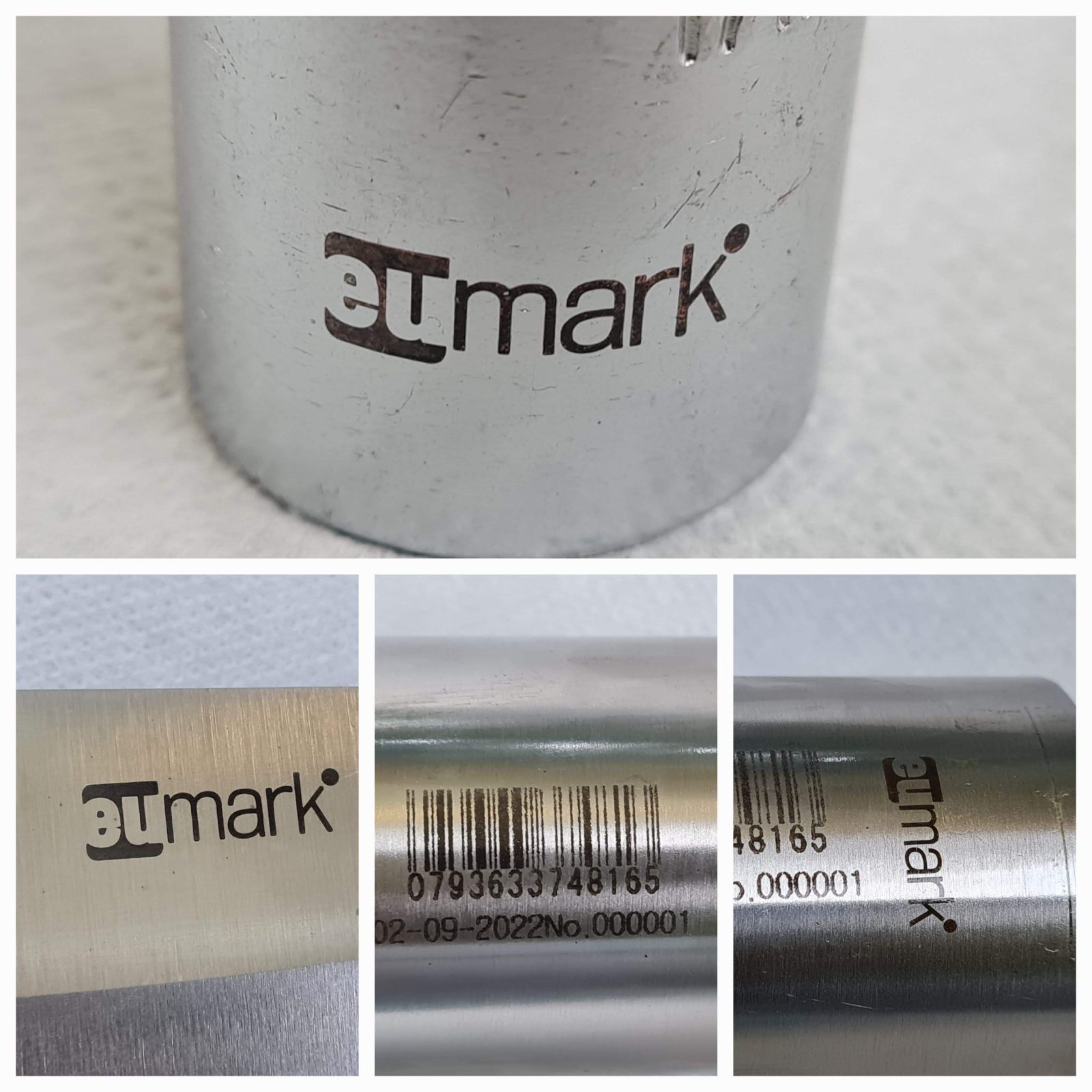
| QR codes | Generated in software |
| Barcodes | Generated in software |
| Image import | PNG and JPG |
| Connection | USB and Bluetooth |
| Print resolution | 300 dpi |
Stated plainly, because you would find out anyway: the software imports raster images, not vector files. That is a real limitation and it shapes how the kit gets used. Content that changes — serials, lot codes, dates, symbols — goes through the printer. Content that repeats — your logo, a fixed part identifier — belongs on a long-life photo stencil, which we produce from your vector artwork (SVG, DXF, AI, EPS) at full fidelity and which runs up to 5,000 marks. Shops that use both get the best of the arrangement.
Marking specifications customers bring us
- MIL-STD-130 — identification marking of US military property, where chemical etch appears among the accepted permanent methods for metal items, and where variable serial content is the norm rather than the exception
- SAE AS9132 — data matrix quality requirements for parts marking; acceptance rests on cell fill, contrast and dot placement rather than on which technology produced the symbol
- FDA UDI direct marking, 21 CFR 801.45 — reusable devices reprocessed between patients, where the identifier has to outlast the cleaning and sterilization life of the instrument
- AS9100 / ISO 13485 traceability — serial, lot and part identification inside your quality system
Straight answer on certification: the equipment does not hold one, and no marking equipment does. Compliance attaches to the marked part and to your qualification of the process. What this kit gives you is a short variable list — current mode, dwell time, electrolyte, felt saturation, stencil condition — which makes that qualification quick to write and easy to hold.
What the process does to the part
| Property | Effect | Why it matters |
|---|---|---|
| Heat input | none | No HAZ to disposition on heat-treated or age-hardened alloys |
| Recast / remelt layer | none | No micro-cracking initiation site on cyclically loaded parts |
| Residual stress | none added | Fatigue allowables unchanged; no shot peen rework triggered |
| Material removal | ~0.001″ surface conversion | Safe on thin wall sections and finished dimensions |
| Burrs / raised edges | none | No deburr operation after marking; nothing to snag on sealing faces |
| Hardness and temper | unchanged | Marking happens last, on the finished part |
| Corrosion resistance | preserved | Neutralize with N11, then passivate to your existing procedure |
Kit contents
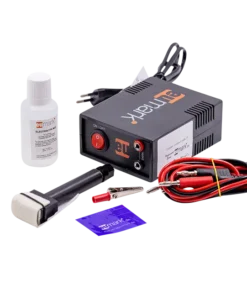
- EUmark marking unit, 110 V / 220 V, with power and marking cables
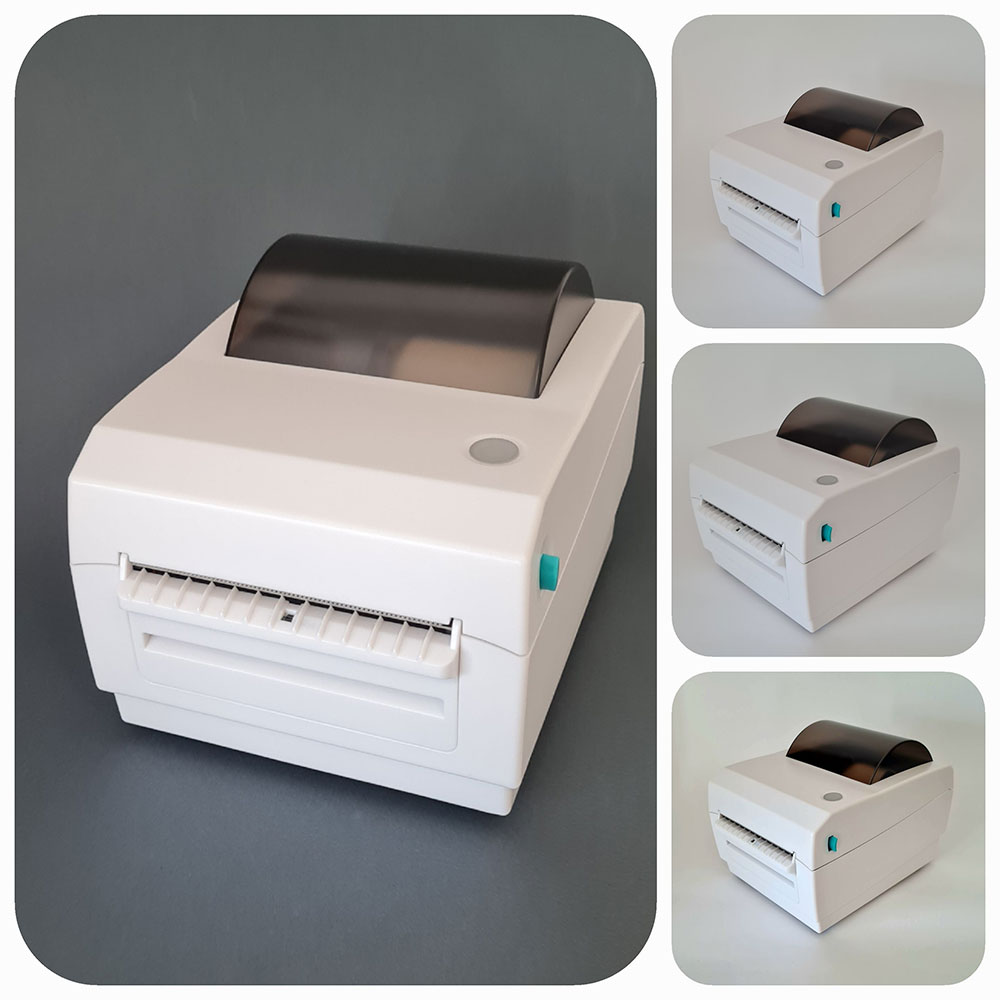
- Stencil printer, up to 108 mm print width
- Stencil design software — included, no license fee: sequential serials, QR codes, barcodes, PNG and JPG import, USB and Bluetooth to the printer
- Stencil tape, 100–115 mm wide × 108 m, one roll
- Hand stamp (marking head)
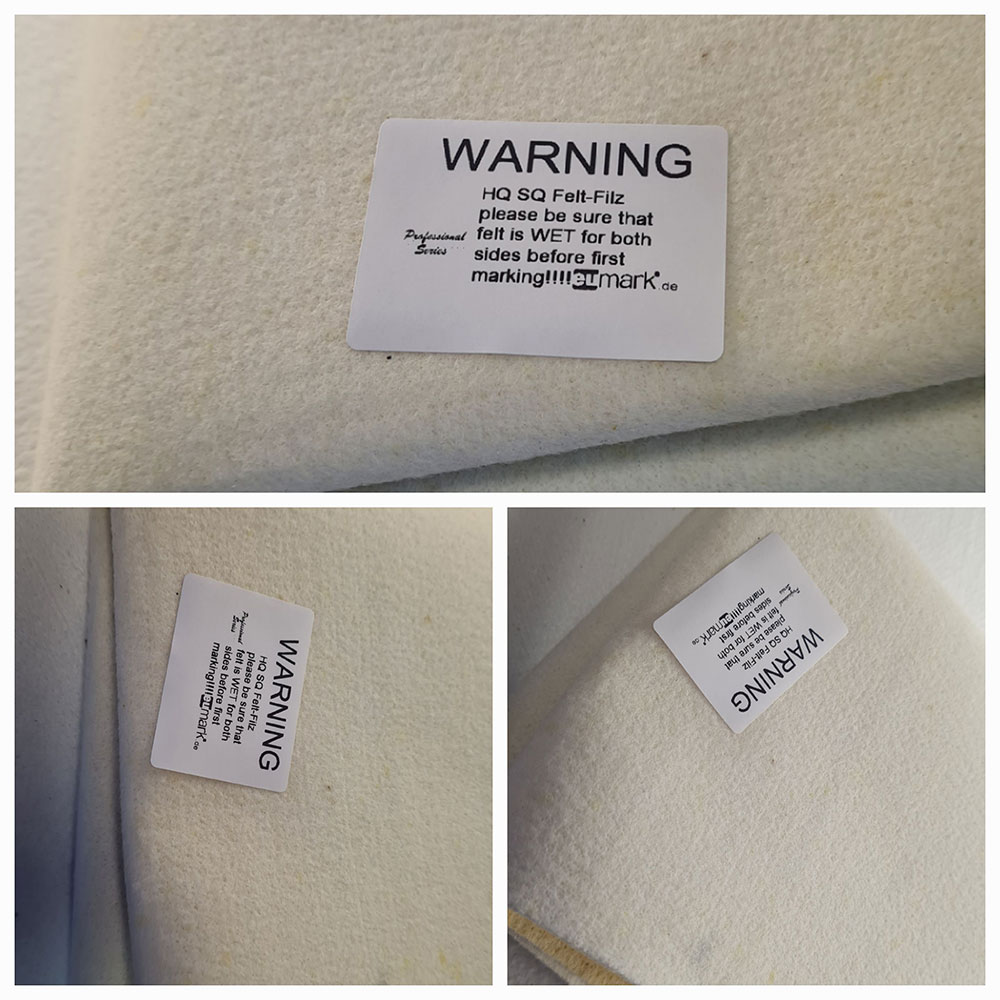
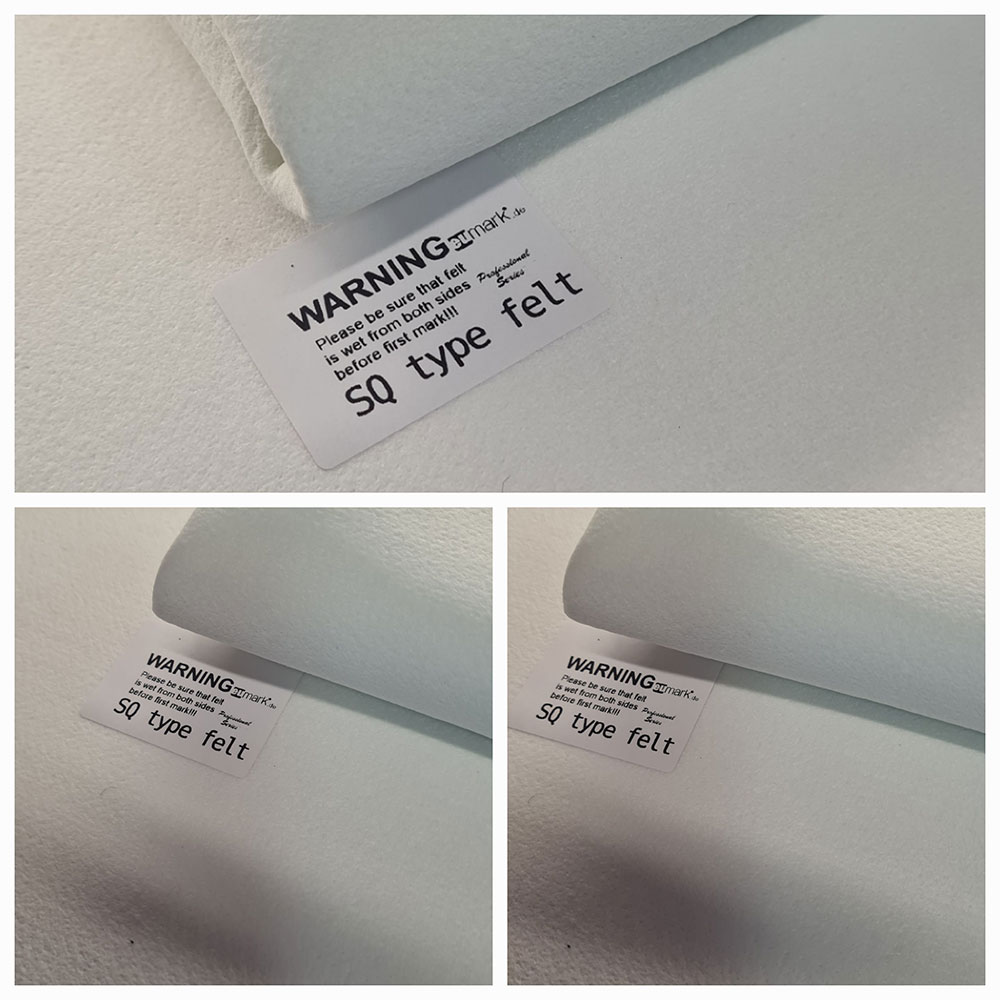
- 2 × marking felt, 375 × 500 mm (10″ × 19″)
- Electrolytes M21, M22, M23 and N11 Neutralyte — 200 ml each
- Sample long-life stencil and sample printed stencil
The four fluids, and why they are the part of this kit that matters most
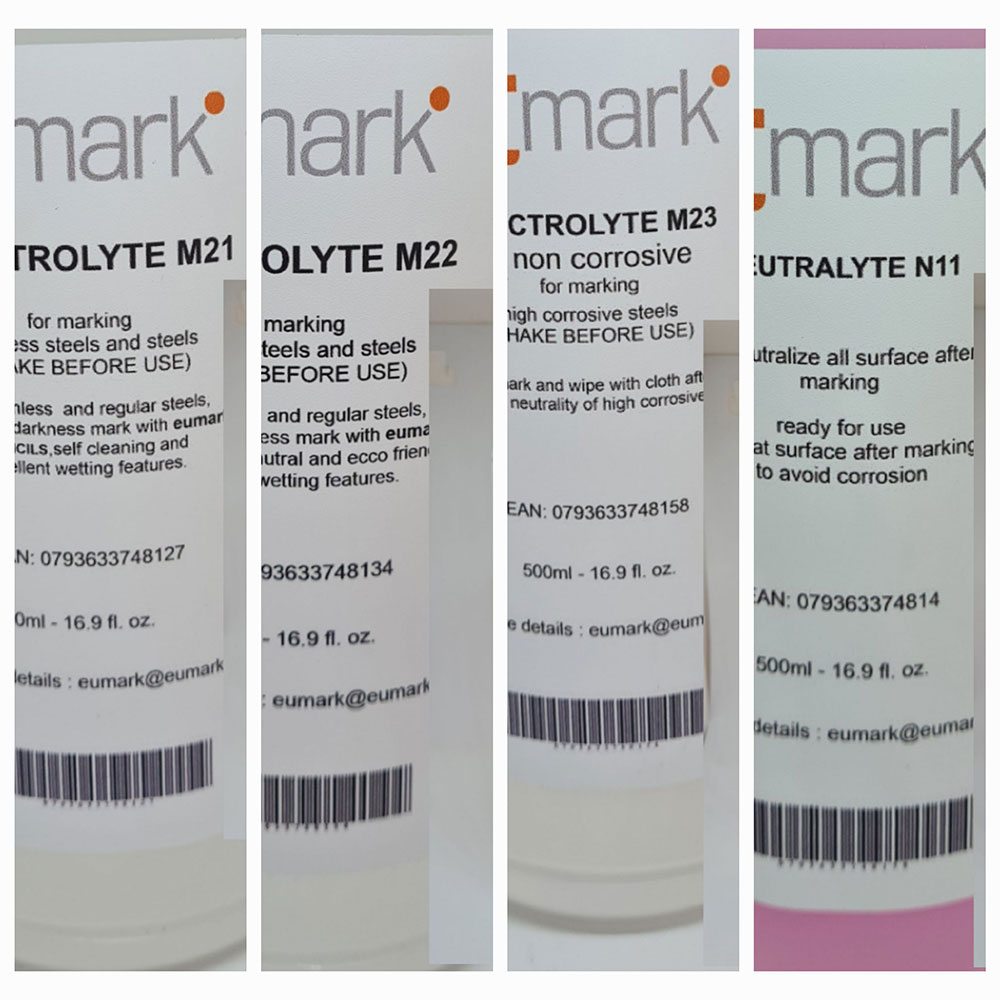
Marking units are broadly similar across the industry. Electrolytes are not, and they are where the result actually comes from. Four are supplied here, each in a 200 ml bottle.
| Fluid | How it behaves | Reach for it when |
|---|---|---|
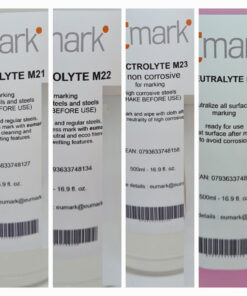
| M21 | Self-cleaning. Gets a high number of marks out of one wetting of the felt. | Running a batch. The operator is not stopping to re-wet or wash the felt between parts — which is where the real cycle time in manual marking gets lost. |
| M22 | Very dark mark, and the fluid used for deep etch. Requires the felt to be washed after use. | Maximum contrast, or a print calling for etch depth rather than surface contrast alone. |
| M23 | Non-corrosive, formulated for marking highly corrosion-sensitive materials. Wipe the surface with a dry cloth after marking — that is the whole post-process. | Corrosion-critical hardware, or any part where a wet neutralizing step is impractical. |
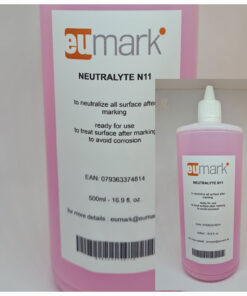
| N11 Neutralyte | Protects the marked surface after etching. | Standard finishing step after M21 or M22. |
Read this before you order: the table is a recommendation, not a specification. Alloy, condition, finish and prior processing all change the outcome, so trial marking on your own material is a required step, not a nice-to-have. Send a coupon and we will run the first trial for you.
Formulation and safety data sheets
The strongest argument for these fluids is not the mark. It is that they are formulated to the requirements applied in medical, aerospace and food-contact manufacturing, and that every fluid ships with a safety data sheet. Quality and EHS functions need those sheets for incoming inspection, hazard communication and the audit file. In a regulated shop, an undocumented consumable does not get approved for the floor no matter how well it performs — which is precisely why shops replacing an unbranded electrolyte end up here.
SDS documents ship with the order and are available in advance on request, so your quality group can clear them before the PO is cut.
Specifications
| Method | Electrochemical etch marking, AC and DC |
|---|---|
| Marking modes | Black oxide marking and deep etch |
| Input | 110 V / 220 V AC — ships ready for US, EU and UK mains, no conversion needed |
| Output voltage | 10–15 V |
| Max output current | 15 A |
| Power consumption | up to 150 W peak |
| Protection | Fuse plus thermal fuse |
| Marking cycle | 2–5 seconds per mark |
| Full cycle per part | approx. 10 seconds — mark, wipe, load the next part |
| Indicative throughput | about 6 parts per minute at a steady rate |
| Mark depth | approx. 0.001″ (0.025 mm) marking mode; deeper in etch mode, dwell dependent |
| Alloys | Any conductive metal — 300 and 400 series stainless, tool steel, carbon steel, aluminum, titanium, brass, chrome plate |
| Part geometry | Flat, round, ID and OD, concave, convex, hollow, assembled |
| Stencil printer | Up to 108 mm print width |
| Printer resolution | 300 dpi |
| Printer connection | USB and Bluetooth |
| Stencil tape supplied | 100–115 mm wide × 108 m, one roll |
| Photo stencil service life | up to 5,000 marks |
| Marking unit footprint | 6.3″ × 6.3″ × 2.6″ (160 × 160 × 65 mm) |
| Shipping weight, complete kit | 11 lb (5 kg) |
| Expected service life | 10+ years in normal shop use |
| Warranty | 2 years |
| Built by | EUmark, Serbia — in production since 1999 |
How it compares
| SUPER SET 04 | Fiber laser | Dot peen | |
|---|---|---|---|
| Marking modes | Black oxide and deep etch | Engrave only | Indent only |
| Heat input | none | yes | none |
| Surface deformation | none | none to slight | indented, raised edges |
| Variable data | Printed stencils, in-house | File, software | File, software |
| Curved / hollow parts | Yes, by hand | Needs fixturing or rotary | Limited |
| Footprint | A corner of a bench | Dedicated station, enclosure | Dedicated station |
| Operator training | Minutes | Software plus laser safety program | Software |
Where a laser wins is high-rate variable marking with no consumables at all. Where this kit wins is capital cost, portability, and putting no energy into the part.
The software is what makes serialization practical — cost per part
Put the numbers together and the production picture is straightforward. A full cycle — mark, wipe, load the next part — runs about 10 seconds, so roughly six parts a minute at a steady pace. A 200 ml bottle covers up to 20,000 marks, which is on the order of 55 hours of continuous marking at that rate. One 108 m tape roll yields a large number of printed stencils, on the order of two thousand at a 2″ stencil length. Photo stencils, ordered from us for content that repeats, run up to 5,000 marks each.
Add it up and the consumable cost of a marked part is small enough that it stops being a variable worth managing.
Qualifying it in your shop
- Mark coupons in your production alloy across a dwell time range, in both modes.
- Verify contrast, depth and legibility; grade the symbol if you are marking data matrix or barcode.
- Neutralize with N11, passivate to your existing procedure, then run your standard corrosion check on the marked coupon.
- Record the accepted parameter window in the work instruction and set a stencil replacement interval.
We supply marked sample coupons in your own material on request, so the first-article conversation happens before the purchase order rather than after it.
Questions from quality and manufacturing engineering
How is this different from Set 03?
Set 03 comes with a 58 mm printer sized for text and fine lines, 58 mm tape in 10 m rolls, and sample-size fluids. SUPER SET 04 has the wider up-to-108 mm printer with serial number, QR code and barcode software, a 108 m roll, and full 200 ml bottles of all four fluids. Set 03 is for text and fixed-content marking. Set 04 is for serialization and scannable codes.
How is this different from Set 07?
Set 07 runs the same CD410-class serialization software on a compact machine — black oxide marking only, no deep etch. SUPER SET 04 is built on the full machine, so it does both. If a drawing calls for etch depth, or you are not yet certain you never will need it, SUPER SET 04 is the safer specification.
Can every part carry a different number?
Yes. That is the whole reason for the printer. Serial numbers auto-increment across a run in the included software, so nobody retypes a number and nobody transposes one. There is no tooling charge per design, no scheduling and no minimum order.
Can it produce machine-readable symbols?
QR codes and barcodes are generated in the included software and printed at 300 dpi. Achievable cell size then depends on that resolution and on the part surface finish, not on the marking unit. Send us the symbol size and part finish and we will tell you honestly whether it will grade against your standard before you buy.
Can I mark hardened and age-hardened parts?
Yes, and that is the main reason customers move to this process. There is no thermal or mechanical input, so hardness, temper and geometry are unaffected. Marking is performed on the finished, final-inspected part.
Does marking affect corrosion resistance on stainless?
Not when the marked area is neutralized with N11 and passivated along with the rest of the part under your existing procedure. Confirm it once on a coupon during qualification and record the result.
Can it be used in the field or at a customer site?
Yes. The unit measures 6.3 by 6.3 by 2.6 inches, the complete kit ships at 11 lb, and it needs only a bench and a wall outlet. MRO and field service customers use it for replacement part identification and repair tagging.
What is the smallest feature that holds?
Strokes below about 0.008″ (0.2 mm) tend to close up, whatever produced them. For photo stencils, send artwork as SVG, DXF, AI or EPS with the part finish and we will review it against your part before making the stencil.
Where does it ship from, and what will landed cost be?
Orders dispatch from Serbia and ship worldwide. Duties, tariffs and import handling vary by destination and change often. Tell us the delivery country before you order and we will provide the tariff classification, the shipping method and a landed cost estimate in writing.
Before you buy
Send the alloy, part geometry, mark content and annual volume, and we will confirm the right configuration — including telling you if a smaller set covers it.
Related products
Electrochemical etching sets
EUmark Set 07 – Serial Number Marking Kit with CD410 Stencil Printer




Electrochemical etching sets
EUmark Set 02 – Etch Marking Kit with Stencil Printer for Text and Fine Lines
Electrochemical etching sets
EUmark Set 05 – Compact Electrochemical Marking Kit, Black Oxide