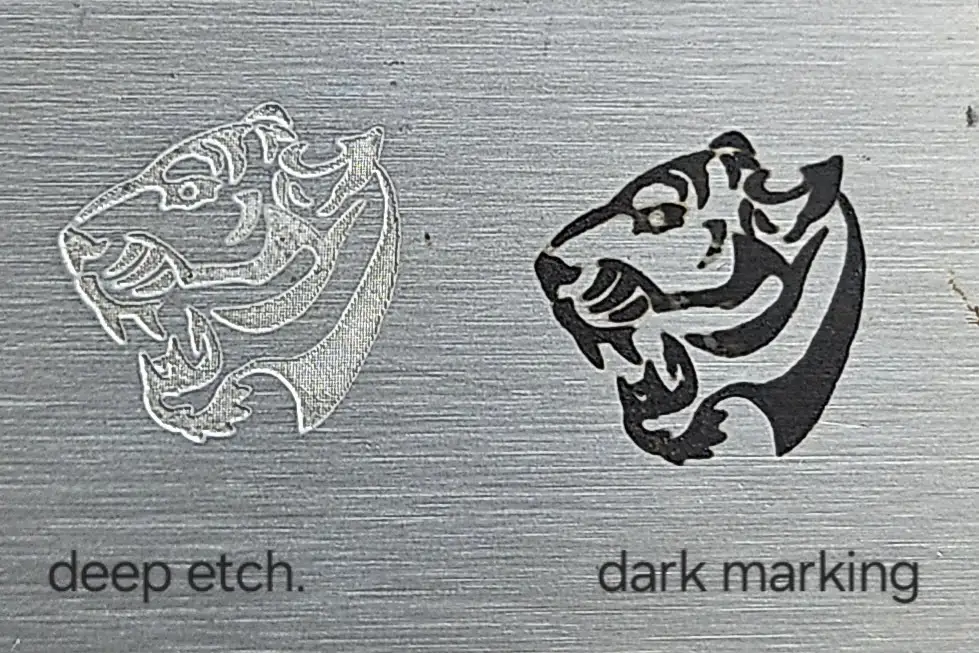
The Marking Method That Lives in the Spec: Electrochemical Etching for Aerospace and Medical Parts Across most manufacturing, a part number is something you add at the end. In aerospace and medical device work it is something you engineer in from the start — called out on the drawing right next to the material and […]
Tag Archives: electrochemical
Both electrochemical marking and fiber laser engraving can produce permanent black marks on metal. Both are used in professional industrial environments. But when you’re standing on a shop floor deciding which system to buy, the differences matter more than the similarities. This comparison focuses on four practical criteria: mark quality, flexibility on non-flat surfaces, speed, […]
Most electrochemical marking pads use felt or foam cores. They work — but they’re imprecise about how current flows through the pad and into the marking area. The result is inconsistency: marks that look slightly different from one press to the next, uneven edges on fine text, higher electrolyte consumption. EuMark’s high-density graphite hand stamp […]
Electrochemical marks are already permanent. The oxide layer formed during marking bonds chemically with the metal surface and resists abrasion, common chemicals, and standard cleaning processes. But in aggressive industrial environments — salt spray, coolant exposure, outdoor weathering, repeated handling — even a well-made mark can degrade faster than expected. Protective oil is the final […]
The traditional limitation of electrochemical marking has always been the stencil. The marking device itself is fast and portable — but if you needed to change what you were marking, you needed a new stencil, and that meant either ordering from a supplier or cutting one manually. EuMark’s dedicated stencil printer removes that constraint entirely. […]
The marking device and stencil are only part of the equation. The electrolyte formulation determines the chemistry of the oxidation reaction, which directly affects the color, depth, contrast, and durability of the finished mark. Using the wrong electrolyte for your metal type produces weak results. Using the right one produces marks that last. Here’s a […]
Electrochemical marking isn’t new — the technology has been used in industrial environments since the mid-20th century. What has changed is how accessible and refined the equipment has become. Today, EuMark systems are used by small workshops and multinational manufacturers alike, for one straightforward reason: they solve marking problems that other methods create. Here are […]